
 Español
 Français


There are no more items in your cart



Si bajamos el precio antes del 30, te devolvemos la diferencia. Ver condiciones


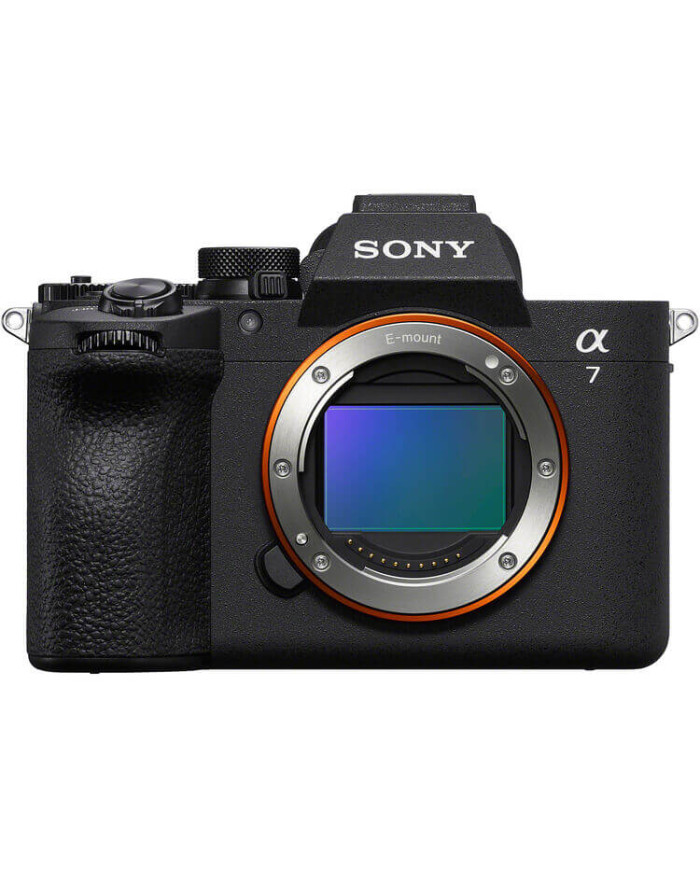
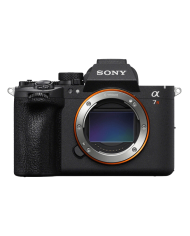
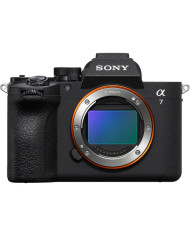
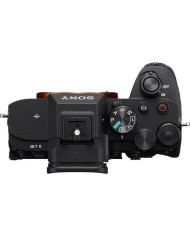
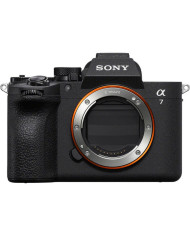
The Sony A7 V is the fifth generation of the Alpha 7 series, Sony's best-selling full-frame mirrorless camera range. Launched in December 2025, it is not an incremental update: the new partially stacked sensor, the BIONZ XR2 processor with integrated AI unit and the revised thermal management represent a genuine generational leap over the A7 IV, especially in shooting speed, video quality and autofocus performance.
The result is a camera that covers everything from wildlife or sports photography at 30 fps to long-duration professional 4K 60p video recording, through weddings, events and social media content — all in one full-frame body.
The A7 IV had the same number of megapixels (33 MP) but a conventional BSI sensor architecture. The A7 V changes that with a sensor Exmor RS parcialmente apilado, which places high-speed circuitry above and below the photosensitive layer. The practical result is a readout speed 4,5 veces mayor.
Why does this matter?
The A7 V's AF system incorporates a dedicated AI processing unit, technology that until now was found only in Sony's flagship cameras (A1 II, A9 III). This unit works in parallel with the main processor and is responsible exclusively for subject detection and tracking.
What this means in practice:
The system recognises people, animals, birds, insects, cars, trains and aircraft — without needing to manually select the subject type. The camera detects and tracks the most relevant subject in the scene on its own. Recognition of animals and birds is between 30% and 50% faster than on the A7 IV, according to Sony.
The human pose estimation tracks the position of the whole body and prioritises focus on the eyes even when the person is partly turned or moving. If another person crosses in front of the subject, the camera keeps focus on the original person.
The 759 phase-detection points cover 94% of the sensor area and work down to -4 EV in AF-S, equivalent to an almost dark scene.
30 fps with no blackout with electronic shutter. The mechanical shutter reaches 10 fps. In both cases, AF and exposure are calculated frame by frame.
The function of precaptura stores images in the buffer from the moment the shutter button is pressed halfway, with a configurable time between 0.03 and 1.0 seconds. When fully pressed, the camera saves the preceding frames along with the following ones. The decisive moment is never lost to a late reaction.
Speed Boost lets you assign a custom button for instant switching to the maximum shooting rate, without accessing menus.
The A7 IV had a known issue: it overheated during long recordings and limited 4K recording to between 10 and 15 minutes at normal working temperatures.
The A7 V fixes this completely:
| A7 IV | A7 V | |
| 4K 60p without crop | No disponible | ✅ FF, sobremuestreo 7K |
| 4K 120p | No disponible | ✅ Super 35 |
| Full HD up to 240 fps | No disponible | ✅ |
| 4K 60p recording endurance at 40ºC | ~10min | ~60min |
| 4K 60p recording endurance at 25ºC | limitada | ~90min |
| Native dual ISO in S-Log3 | No | ✅ (800 and 8000) |
| RAW interno | No | N |
The 4K 60p without crop uses oversampling from 7K, which produces a noticeably sharper image than recording directly in 4K. The encoding is XAVC S-I All-Intra at 10-bit 4:2:2 at up to 600 Mbps — enough resolution for the vast majority of professional workflows without RAW.
The doble ISO nativo in S-Log3 (800 and 8000 ISO) allows recording in low light — banquets, interiors, night scenes — with image cleanliness that previously required specialised cameras such as the A7S III.
The A7 V does not record internal RAW nor have RAW output over HDMI. If your workflow requires camera RAW, you need Sony's Cinema FX line.
The 5-axis IBIS compensates for up to 7,5 pasos of shake at the centre of the frame and 6.5 stops at the periphery. Compared with the A7 IV's 5.5 stops, the difference is clearly noticeable when shooting handheld in low light or with telephoto lenses.
The dynamic active stabilisation adds additional electronic correction for recording on the move — walking, running or tracking shots with the camera in hand.
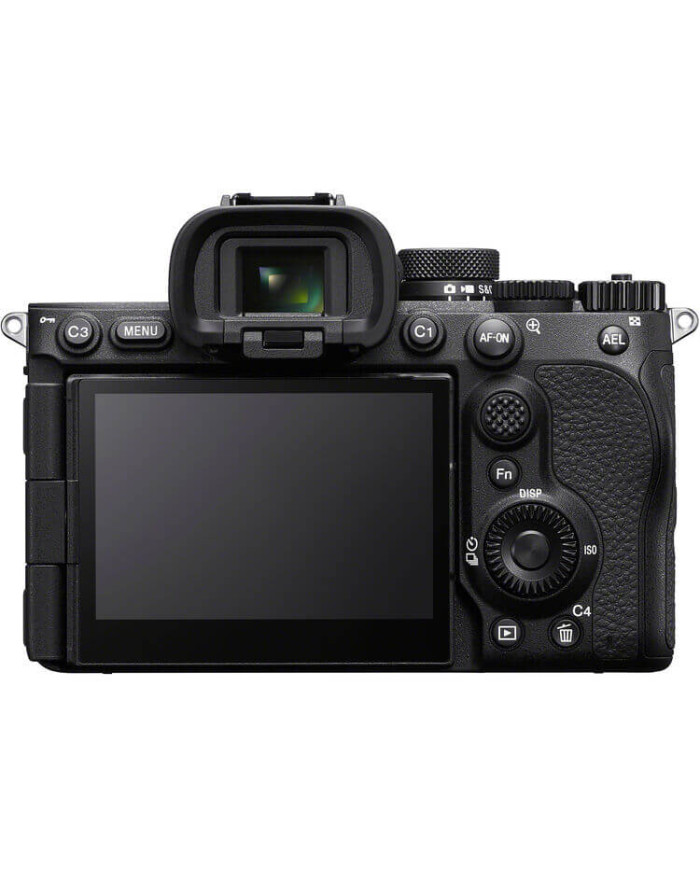
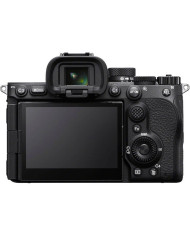
The screen is the most notable design change from previous generations. The A7 V features a 4-axis multi-angle 3.2" (2.1M dots) screen with side opening and vertical tilt, combining the advantages of the tilting design (for high and low angles) with those of the variable-angle design (for front-facing self-recording). It is touch-sensitive and covers the DCI-P3 colour gamut.
The OLED EVF shows 3,68 Mptos with 0.78× magnification and 120 fps refresh rate — exactly the same viewfinder as the A7 IV.
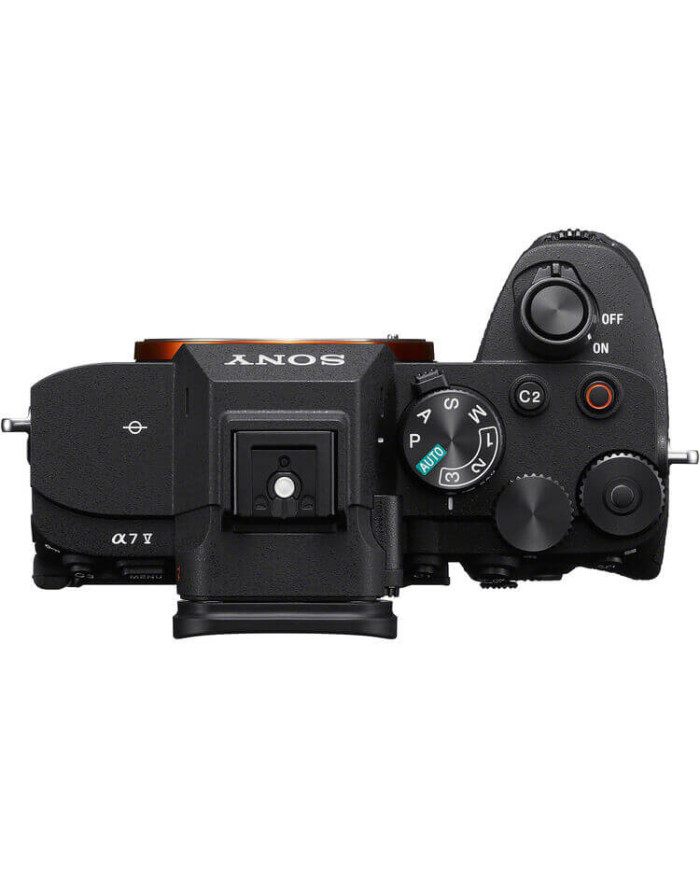
The body measures 130.3 × 96.4 × 72.3 mm and weighs 695 g with battery and card.
Dos puertos USB-C: the first is USB 3.2 Gen 2 (up to 10 Gbps for data transfer and 4K webcam); the second is USB 2.0 for charging and power supply while the first is in use. This solves the problem of not being able to charge and transfer data at the same time.
Full-size HDMI for connection to external recorders without an adapter.
Two card slots: CFexpress Tipo A + SD UHS-II and SD UHS-II adicional.
NP-FZ100 battery — the same one Sony bodies have used since the A7 III. Battery life: 630 shots with viewfinder or 750 shots with LCD screen, 21-29% more than the A7 IV.
Sealed against dust and moisture with a magnesium alloy chassis.
It's your camera if:
It's not your camera if:
| A7 IV | A7 V | |
| Sensor | BSI CMOS 33MP | Exmor RS parcialmente apilado 33 MP |
| Readout speed | base | 4.5x faster |
| Maximum burst | 10 fps | 30 fps with no blackout |
| 4K 60p without crop | ❌ | ✅ |
| 4K 120p | ❌ | ✅(Super 35) |
| Full HD 240 fps | ❌ | ✅ |
| 4K recording endurance at 40ºC | ~10 min | ~60 min |
| IBIS | 5,5 pasos | 7,5 pasos |
| AI unit in AF | ❌ | ✅ |
| Precauptura | ❌ | ✅ |
| Doble ISO nativo S-Log3 | ❌ | ✅(800/8000) |
| Pantalla | 3" inclinable | 3.2" 4-axis multi-angle |
| Doble USB-C | ❌ | ✅ |
| Battery life (EVF) | 520 disparos | 630 disparos |
The jump is substantial. If you work in action, video or wedding/event sessions where thermal reliability matters, the additional price is more than justified.
Does the Sony A7 V record RAW? No. The maximum internal recording is XAVC S-I All-Intra at 10-bit 4:2:2 at up to 600 Mbps. It has no RAW output over HDMI. For internal RAW you need cameras from Sony's Cinema FX line.
How long can it record in 4K non-stop? At 25°C, approximately 90 minutes in 4K 60p 8-bit. At 40°C, approximately 60 minutes. It is a huge leap over the A7 IV's ~10 minutes at the same temperature.
Is it good for sports or wildlife photography? Yes. The 30 fps with AF and AE active, pre-capture and AI subject recognition (including birds and insects) make it the first camera in the standard A7 series that is truly suited to demanding action.
Is it compatible with my A7 IV lenses? Yes. The mount is Sony E (FE). All FE lenses are directly compatible.
What memory cards do I need? To make the most of 30 fps bursts in RAW, CFexpress Type A is recommended. Slot 1 accepts CFexpress Type A and SD UHS-II. Slot 2 accepts SD UHS-II.
Can it be used as a webcam? Yes. The USB-C 1 port (USB 3.2 Gen 2) lets you use the camera as a 4K webcam with UVC/UAC support, without additional software on most systems.
What is the difference from the Sony A7R V? The A7R V has 61 MP, aimed at maximum resolution for landscape, architecture and studio work. The A7 V has 33 MP with a partially stacked sensor, optimised for speed, video and AF in dynamic scenes. They are cameras with clearly different use profiles.
Is the battery compatible with my other Sony bodies? If you have an A7 III, A7 IV, A7R V, A9 III, FX3 or any recent Sony body, the NP-FZ100 battery is compatible.
Descubre more products from the range and objetivos compatibles at FotoCineColor. We are an official dealer with 24h shipping and Spanish warranty.