
 Español
 Français


There are no more items in your cart


Si bajamos el precio antes del 30, te devolvemos la diferencia. Ver condiciones
33 MP full-frame Exmor R CMOS sensor
Shooting up to 10 fps, ISO 100-51200
10-bit 4K 60p video, S-Cinetone
3.68 million dot EVF with 120 fps refresh rate
3" 1.03 million dot vari-angle touchscreen LCD
Fast 759-point hybrid autofocus, real-time Eye AF
Focus breathing compensation
5-axis SteadyShot image stabilisation
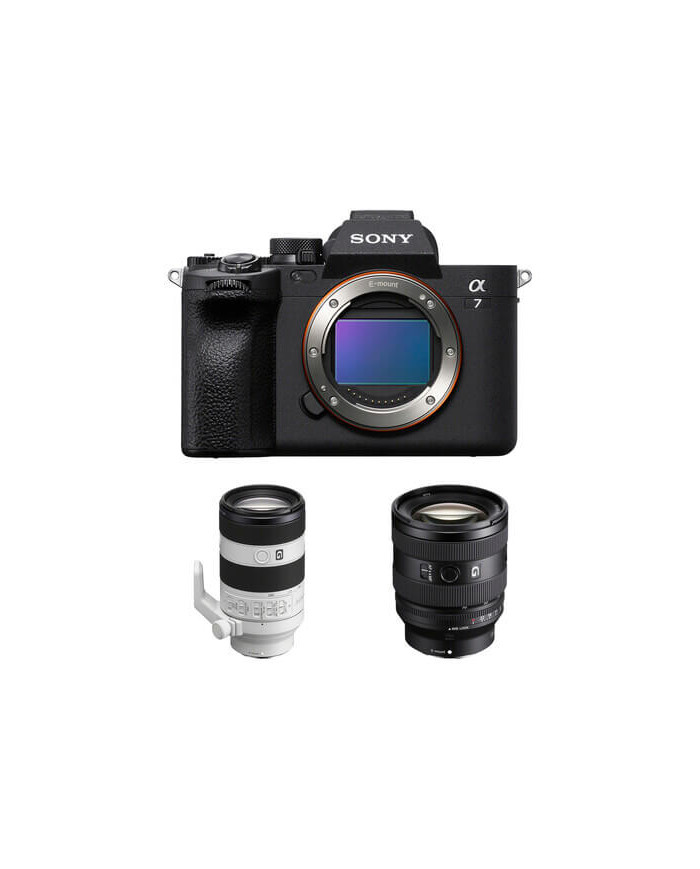
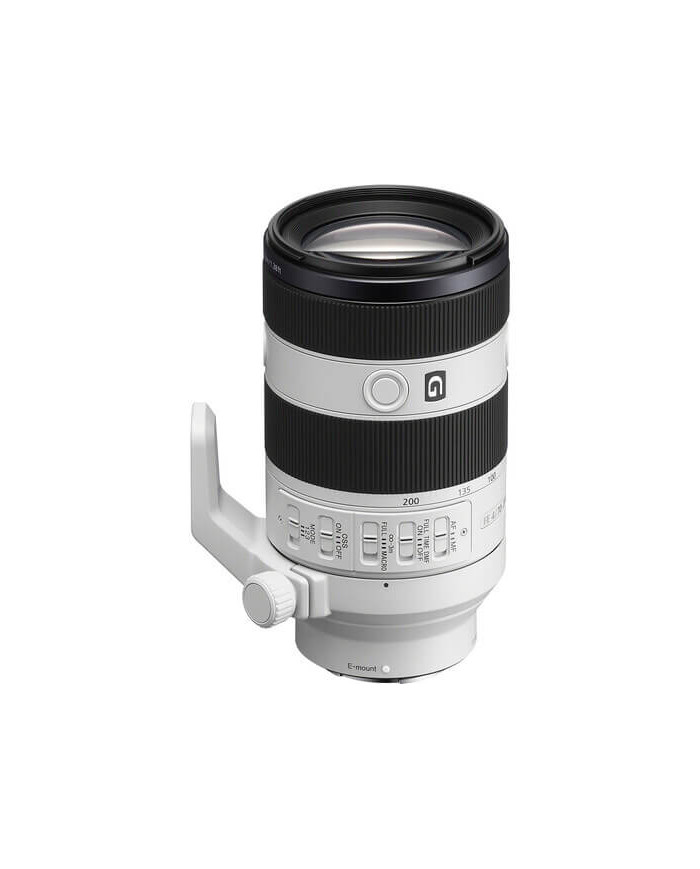
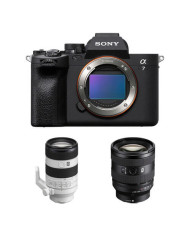
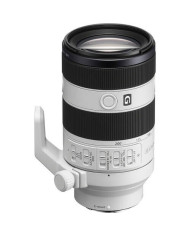
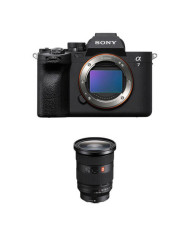
FE 70-200 mm f/4 Macro G OSS II lens
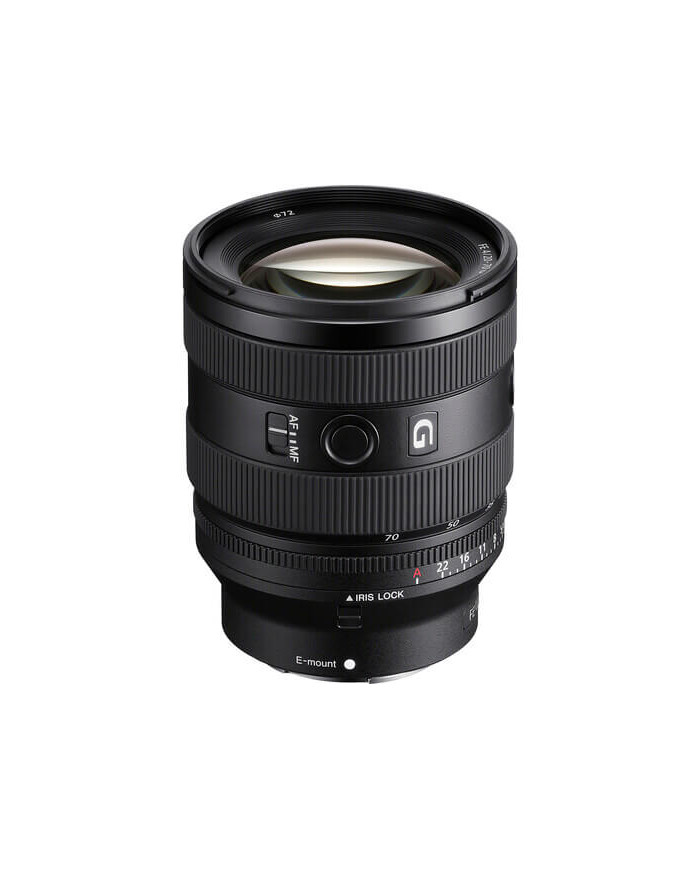
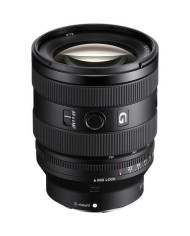
FE 20-70 mm f/4 G lens


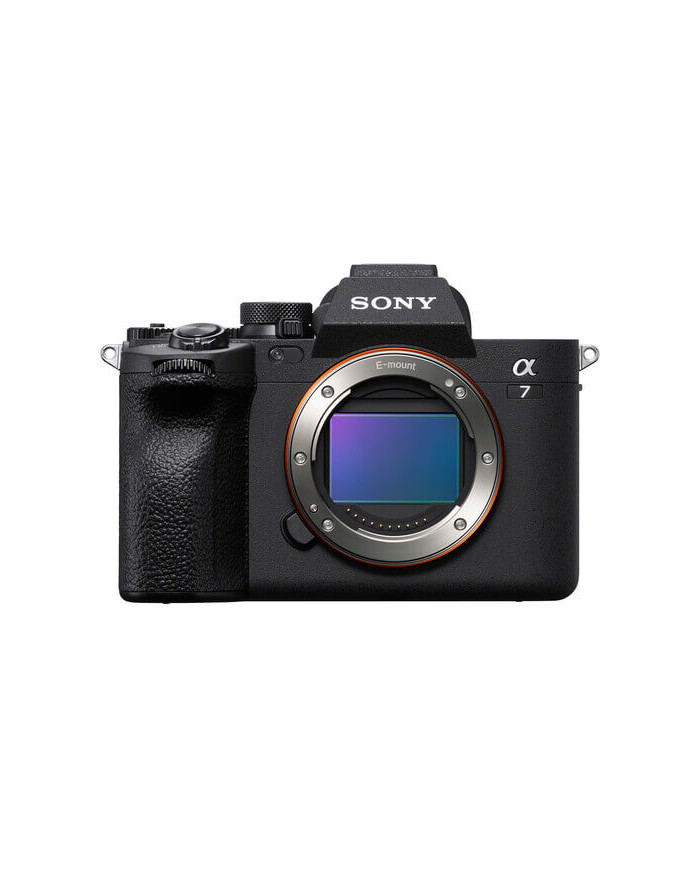
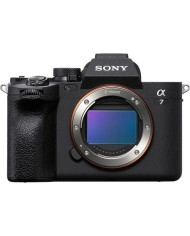
A versatile camera that goes beyond the basics, the Sony a7 IV delivers outstanding performance for both photography and video. An advanced hybrid mirrorless camera, the a7 IV offers the resolution and autofocus performance that appeal to photographers, plus powerful 4K 60p video recording for filmmakers and content creators.
The new 33 MP full-frame Exmor R BSI CMOS sensor features a back-illuminated design that delivers high clarity, low noise and vibrant colour reproduction. This design makes shooting in low light easier and works together with a wide ISO sensitivity range of 100 to 51200. The sensor design also achieves an impressive dynamic range of approximately 15 stops and allows RAW, JPEG or HEIF files to be recorded in 10-bit.
Thanks to the flagship BIONZ XR engine, high-speed image processing is provided for fast continuous shooting, 4K video recording and advanced AF tracking performance. This rapid processing also helps reduce the rolling shutter effect and other motion distortion for sharp rendering of moving subjects.
In terms of shooting speed, the sensor and processor allow shooting at up to 10 fps, using either the mechanical or electronic shutter and with AF/AE tracking enabled. In addition, the buffer allows up to 828 consecutive uncompressed RAW + JPEG frames to be recorded with a CFexpress Type A card.
Making the most of the 33 MP high-resolution sensor and its fast processing, you can record 10-bit UHD 4K 30p XAVC HS footage using the full width of the sensor, providing 7K oversampling for impressive sharpness and realism.
Oversampled 4K recording is also available, using a 4.6K capture area with Super 35 crop, which outputs UHD 4K at up to 60p in 10-bit.
There is no recording time limit, allowing unlimited clip lengths, and the camera's physical design features an improved heat-dissipation structure for longer recording times. For example, more than one hour of continuous recording in 4K 60p 10-bit 4:2:2.
The a7 IV uses two codecs suited to different workflows: XAVC HS, which uses HEVC/H.265 encoding to retain more detail at lower bit rates, and XAVC S-I, an intraframe codec that offers consistent performance and quality at bit rates of up to 600 Mbps.
S-Cinetone delivers crisp colours and skin tone reproduction with a healthy look. It is compatible with the FX9 and FX6 cameras as well as the a1 and a7S III, and is based on the technology of professional Cinema Line cameras such as the VENICE. This colour profile offers natural mid-tones, soft colours and especially well-controlled highlights. HLG (Hybrid Log-Gamma) compatibility lets you record with a wide colour gamut to produce HDR-compatible content directly from the camera.
S-Log3 is also available to produce a dynamic range of more than 15 stops with greater gradation control in the shadow and mid-tone areas of the image.
The fast hybrid AF system, covering approximately 94% of the image area, incorporates 759 phase-detection points for fast and accurate focusing in a variety of lighting conditions, with sensitivity down to -4 EV. This focusing system is available in all recording modes, benefiting both video and photography.
Drawing on the flagship AF system, the a7 IV features optimised subject detection and tracking functions that quickly lock on and precisely refine focus on recognised eyes and faces.
Real-time Tracking is an AI-based subject recognition system that recognises subject colour, patterns and distance to the subject for high precision and focusing speed.
As well as tracking subjects, Real-time Eye AF refines focus accuracy and recognises the eyes of people, animals and birds for exceptional sharpness. Real-time Eye AF even keeps focus on the subject's eye when it leaves and re-enters the frame, allowing you to work in more spontaneous shooting situations.
Real-time Eye AF is fully supported during video recording for subject detection and eye tracking of people, animals and birds. For greater control over how focus changes appear in your footage, the seven-step AF transition speed and five-step AF subject shift sensitivity controls let you refine how quickly and smoothly focus changes occur.
Focus Map is a unique way to visualise depth of field. It works similarly to peaking, with a colour overlay on the scene showing which parts of the scene are in front of and behind the point of focus, depending on the selected aperture.
AF Assist, a feature inherited from the FX6 digital cinema camera, lets you switch intuitively to manual focus control to adjust the focus position while working with AF. This is a quick way to selectively shift focus between several subjects in a scene while recording.
A unique solution to compensate for the behaviour of certain lenses when racking focus, focus breathing compensation automatically smooths focus transitions and maintains a consistent angle of view when changing focus position during a shot. This mode slightly crops the image and corrects any composition change detected during focusing. This feature is compatible with certain E-mount lenses; see the breathing compensation lens compatibility list here.
An enhanced QVGA OLED Tru-Finder electronic viewfinder offers a resolution of 3.68 million dots, approximately 1.6 times that of its predecessor, for a sharper and clearer display. This viewfinder supports standard frame rates of 60 fps and 120 fps for smooth motion rendering. Its physical design features a 23 mm eyepoint, 0.78x magnification and a 37.3° field of view. Perfect for vlogging or other self-recording needs, the 3.0" 1.03 million dot vari-angle side-opening LCD screen can be used facing forward or tilted up or down to shoot from high or low angles. This LCD screen is also touch-sensitive, allowing intuitive control of recording and menu navigation.
The full-size HDMI Type A port provides a more reliable connection when working with external recorders.
A USB 3.2 Gen 2 Type-C port has been added, along with a micro-USB port, for a faster and more reliable connection. The USB Type-C connection allows the camera to be charged or powered from the mains supply while connected.
The 3.5 mm headphone and external microphone ports allow greater control over audio recording.
The multi-interface shoe is compatible with the optional ECM-B1M shotgun microphone or XLR-K3M adapter kit, which provide enhanced, crisp audio recording by sending a digital audio signal to the camera instead of an analogue one. Signal.
The USB Type-C port can be connected to an optional wired Ethernet LAN adapter to provide 1000BASE-T connectivity, wired remote shooting or FTP transfer.
The enhanced 5-axis SteadyShot INSIDE image stabilisation system, rated at 5.5 stops, compensates for five different types of camera shake when shooting stills and video handheld, and lets you confidently use any lens, including adapted ones, for critical shots without image blur.
For long focal lengths, the system corrects pitch and yaw adjustments. Macro and high-magnification images benefit from horizontal and vertical shift compensation. All shooting styles will benefit from roll compensation. The 5 stabilisation axes operate at all times, even when using third-party lenses and adapters or lenses with built-in optical stabilisation.
In addition, specifically for video, it also features an active stabilisation function. IS Mode adds even more precise stabilisation methods for even smoother footage straight from the camera.
Ideal for flash work when photographing fast-moving subjects, P-TTL flash metering is possible between each exposure when working in low, medium or even high continuous shooting modes. This helps maintain consistent lighting when shooting bursts in low light and is very beneficial when working in changing or low-light conditions. The updated flash control system also helps reduce shutter lag, uses the camera's auto white balance (AWB) information for natural colour reproduction, and lets you adjust the selected flash and transmitter directly from the camera interface.
Built-in Wi-Fi allows remote control of the camera and instant image sharing with mobile devices for direct online sharing. Support for the 2.4 and 5 GHz bands also enables wireless tethered shooting. This connectivity also allows remote control of the camera.
Using the Imaging Edge mobile app benefits from Bluetooth to maintain a reliable connection between the camera and the mobile device.
Compatible with Visual Story for easy delivery of photos and videos to the cloud immediately after capture.
Live streaming is possible directly from the camera by connecting it to a compatible computer or mobile device via USB, allowing you to use the camera's video and audio functions for social media and live video conferencing.
Recording settings include 4K 15p, FHD 60p/30p and HD 30p, and the camera also features the in-camera effects Creative Look and Soft Skin for refined image quality straight from the camera.
Supports internal recording to a memory card during live streaming.
Compatible with UVC and UAC standards for better image and sound quality during streaming.
After nine years of development, Sony has redesigned its classic, rugged telephoto zoom as the FE 70-200 mm f/4 Macro G OSS II, featuring improved autofocus, stabilisation, magnification and sharpness performance while reducing its length and size. A faithful portable companion for events, sports and portraits, this latest version extends its capabilities to video and macro applications.
The most significant change to the lens's optical design is the introduction of a floating focus element, which enables a high-resolution 0.5x "semi-macro" magnification and reduces the minimum focusing distance to 26.5 cm at 70 mm. This higher resolution is available across the entire zoom range, as is the improved corner-to-corner sharpness of the lens. The lens features aspherical, advanced aspherical, super extra-low dispersion and extra-low dispersion elements to reduce and suppress chromatic and spherical aberrations. The Nano AR II coating controls flare and ghosting, while the rounded nine-blade diaphragm gives the lens smooth, even bokeh.
One of the main improvements of the 70-200 mm f/4 II is its faster autofocus system, optimised for video. With four XD linear motors, two for each focus group of the lens, the lens now offers 20% faster performance than its predecessor and supports focus tracking when using the zoom. The new autofocus system also supports 30 fps high-speed continuous shooting without blackout on the Alpha 1, twice the speed of the f/4 OSS I.
For those who want to bring the lens's strengths to video, Sony has introduced several features from its cinema division. The new autofocus system operates almost silently while dramatically reducing focus breathing and focus shift. The linear response manual focus system ensures smooth, natural operation, while the permanent direct manual focus (DMF) function makes quick adjustments easy using the focus ring in AF modes.
To complete the image quality improvements, the SteadyShot optical image stabilisation built into the lens is designed to work together with the camera body's stabilisation system to ensure sharp images when shooting handheld, even at the longest focal lengths.
In redesigning the 70-200 mm f/4 II, Sony took into account both the durability of the lens and the stamina of the user, reducing the length and weight of the optics by 15%, to 5.8" and 1.7 lb respectively. The internal zoom mechanism minimises front weight to reduce strain when focusing, while its dust- and moisture-resistant design, together with its rubber control rings, make it suitable for adverse weather conditions.
Other design features include:
A removable, rotating tripod collar for greater stability and to reduce strain on the camera's lens mount.
Three AF hold buttons and an AF/MF switch on the lens body for intuitive hands-on control and quick access to selected settings.
Three-mode optical image stabilisation switch to ensure sharpness in a variety of shooting conditions.
A permanent DMF switch to override manual focus in AF-C mode.
Zoom lock and focus range limiter switches to prevent unwanted extension of the lens, or to restrict the usable focusing range to a limited or full range for improved focusing speed. A fluorine coating on the front lens element repels water, oil and other contaminants, making it easier to clean.
The FE 70-200 mm f/4 GM OSS II is compatible with the optional Sony FE 1.4x and 2.0x teleconverters. These teleconverters allow life-size macro photography at a 1:1 magnification across the entire zoom range. When used, the 1.4x and 2.0x teleconverters provide effective focal lengths and apertures of 98-280 mm f/5.6 and 140-400 mm f/8 respectively.
An innovative standard zoom for everyday use, the ultra-wide-angle Sony FE 20-70 mm f/4 G covers a popular and versatile range of focal lengths in a compact, lightweight form. Designed to suit the latest trends in photographic styles, popular with vloggers and content creators, this ultra-wide-angle zoom for portraits delivers excellent edge-to-edge sharpness and outstanding image quality for all your photographic needs. With a wide field of view that is ideal for selfies, landscapes, cityscapes and other wide-angle applications, this lens also offers fast, precise and quiet autofocus, as well as excellent close-up performance at all focal lengths.
Designed for demanding visual creators, this ultra-wide-angle zoom does not compromise on image quality, autofocus performance or video recording capability.
Designed for full-frame Sony E-mount mirrorless cameras, its constant maximum aperture of f/4 maintains even illumination across the entire zoom range.
Incorporates a combination of three ED elements, two AA elements, one ED aspherical element and one standard aspherical element to effectively eliminate chromatic and spherical aberrations, while delivering excellent edge-to-edge sharpness and colour fidelity.
Its rounded 9-blade aperture provides deep, smooth bokeh.
With a set of features optimised for both photography and videography, the FE 20-70 mm f/4 G lens offers fast focusing, improved tracking and a range of attributes designed specifically for videographers. Two XD (extreme dynamic) linear motors provide smooth, silent and precise autofocus, plus improved tracking for photos and videos.
The internal focusing system maintains the lens's overall length and prevents the lens barrel from rotating during focusing, making it ideal for use with circular polarisers and variable ND filters.
The updated optical design effectively eliminates focus breathing, focus shift and axial shift to prevent unwanted movement and changes in angle of view during video recording.
The aperture ring has a click on/off switch and an iris lock, preventing it from moving accidentally between f/4 and f/22.
Optimised for recording, the lens supports active mode image stabilisation and micro-step aperture control for smooth and fluid video capture.
Two programmable focus hold buttons and a focus mode switch for intuitive focus control. Minimum focusing distance of 9.8" with excellent close-up performance at all focal lengths.
Compact and lightweight, this highly versatile ultra-wide-angle standard zoom offers a unique, wide field of view for everyday photography.
Its hybrid construction uses metal and plastic components to maximise durability and a lightweight design.
The fluorine coating on the front lens element repels water, dust, fingerprints and other contaminants, while making the front of the lens easier to clean.
Its dust- and moisture-resistant design includes a rubber ring to seal the lens mount, allowing you to work in adverse weather conditions.