
 Español
 Français


There are no more items in your cart



Si bajamos el precio antes del 30, te devolvemos la diferencia. Ver condiciones
First M camera with built-in electronic viewfinder
60 MP full-frame BSI CMOS sensor
Leica Content Credentials technology
FN button and focus assist settings
5.76-megapixel OLED viewfinder with 0.76x magnification
2.95" touchscreen with Gorilla Glass
64 GB internal memory and UHS-II SD card slot
ISO 64-50 000, up to 4.5 fps shooting
Wi-Fi and USB-C, dedicated FOTOS app
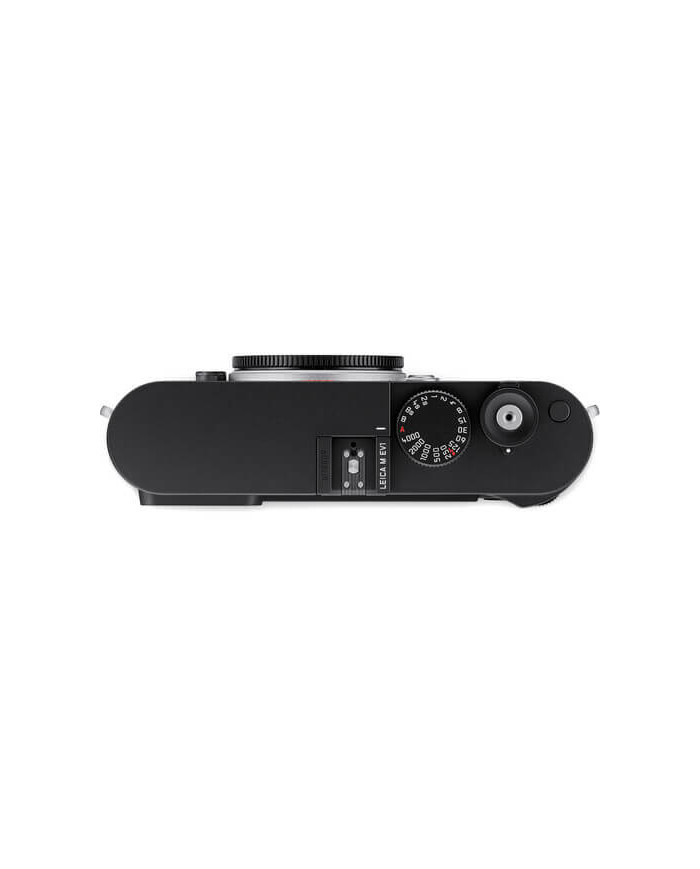
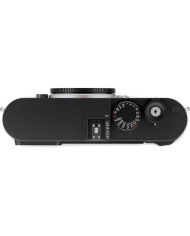
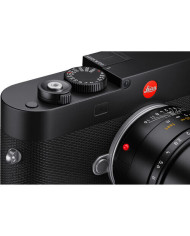
Lightweight aluminium top plate


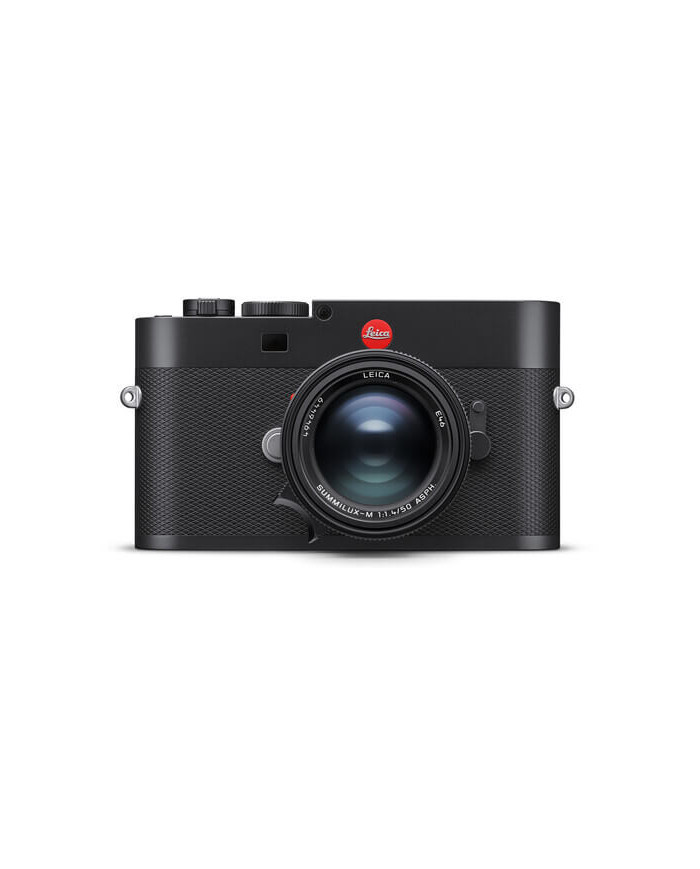
A new milestone for Leica, the M EV1 is the first camera in the M system to incorporate a built-in electronic viewfinder instead of the traditional optical rangefinder. This difference, simple but significant, makes the EV1 especially suited to working with ultra-wide and long focal lengths, as well as faster lenses, while maintaining the classic slim-body design, the same M lens mount and the proven image capabilities of the M11 rangefinder series of cameras.
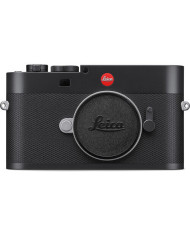
The M EV1, which replaces the optical viewfinder, features the first electronic viewfinder integrated into a camera body of the M system.
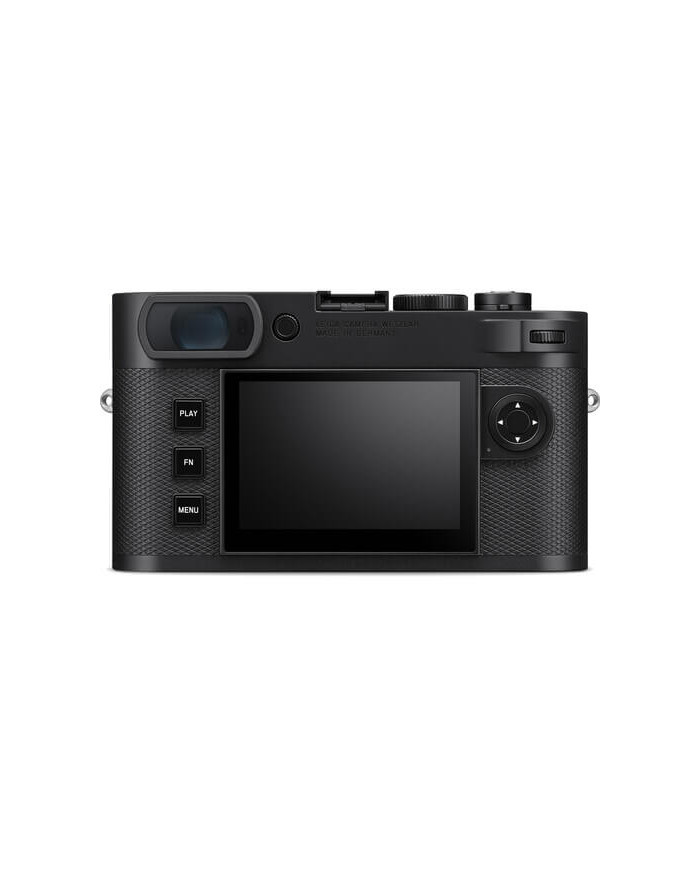
The OLED panel offers a sharp resolution of 5.76 million dots, a generous 0.76x magnification, built-in diopter adjustment and 100% coverage of the image frame.
The electronic viewfinder (EVF) shows exactly what the sensor is recording, allowing precise framing and more reliable focusing, especially with faster Summilux and Noctilux lenses and when working with shallow depths of field.
Another key advantage of the electronic viewfinder is the ability to work with focal lengths that are not usually compatible with the viewfinders of M rangefinder cameras, including ultra wide-angle lenses and telephoto lenses.
The typical limitations of the rangefinder focusing system no longer apply, allowing precise use of macro lenses, adapted lenses and lenses with shorter minimum focusing distances. It is now possible to preview the digital zoom function in the viewfinder, with 1.3x or 1.8x frame crops visible within the full image frame area.
The EVF also makes it easier to work with different focusing tools to achieve sharp focus with various lenses:
Focus Peaking highlights sharp, in-focus areas and edges in bright colours to make the subject easier to recognise.
Focus Assist/Magnification offers two magnification steps to enlarge the frame and better recognise in-focus detail. This can be activated manually using the FN button or set to activate automatically when turning the lens focus ring.
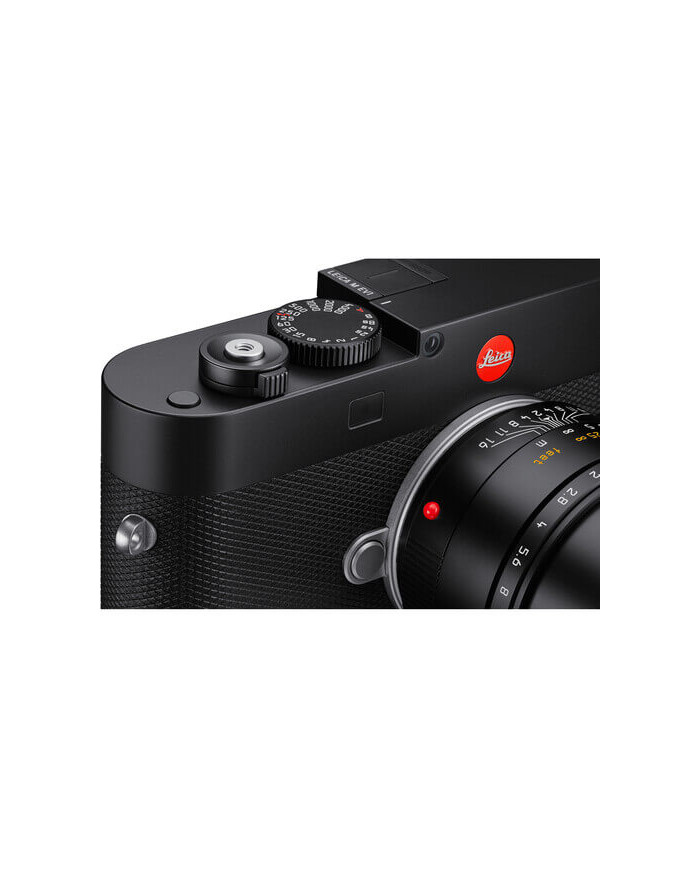
With the replacement of the optical viewfinder by an EVF, the former frame selector lever now has a new purpose: the FN button to switch between focusing aids or digital zoom. A long press on the lever is used to assign a function, and short presses to turn it on or off.
Real-time exposure preview lets you see the effects of exposure and depth-of-field changes before taking a shot.
Shooting data and exposure information are visible in the EVF. This information stays at the bottom of the frame, leaving a clear, full-frame image for better composition and focusing accuracy.
Composition aids such as a grid and a horizon level can also be displayed in the viewfinder.
With the high-resolution imaging capabilities of the M11 series, the M EV1 features the same 60 MP full-frame back-illuminated (BSI) CMOS sensor, which delivers impressive noise performance and fast readout speeds.
The higher resolution is ideal for applications that require more detail, such as landscapes and architectural subjects, and the noise-reduction benefits of the BSI design improve clarity and colour accuracy when shooting in low light at higher ISO values.
The sensor's physical design also includes an updated ultra-thin dual-layer glass filter that absorbs UV and IR wavelengths for greater clarity and more accurate rendering of M lenses.
This exclusive pixel-binning process lets photographers choose 60 MP, 36 MP or 18 MP output. Each resolution uses the entire sensor area and delivers rich 14-bit colour. Thanks to pixel binning rather than cropping, the lower resolutions improve dynamic range and noise levels:
60 MP: 14 stops of dynamic range, the highest resolution
36 MP: 15 stops of dynamic range, the best balance between resolution and noise
18 MP: 15 stops of dynamic range, the lowest noise levels
The Maestro III processor contributes to faster processing and Triple Resolution Technology, and enables a wider sensitivity range than previous-generation M cameras. An ISO range of 64 to 50000 is now available for greater detail, quality and natural colour reproduction at lower ISO settings. The Maestro III also enables continuous shooting at up to 4.5 fps and facilitates fast file saving for an intuitive shooting experience.
An electronic shutter allows shutter speeds of up to 1/16,000 s, which is useful when working with fast f/0.95 lenses without needing ND filters. A mechanical shutter also offers shutter speeds of up to 1/4,000 s and flash sync of 1/180 s.
It offers multi-field metering in addition to spot and centre-weighted metering, reducing the need to meter and recompose before shooting.
Two digital zoom steps let you simulate working with longer focal length lenses by cropping the image slightly to 1.3x (39 MP) and 1.8x (18 MP) levels. These crops are reversible when recording in DNG format or permanent when recording directly to JPG.
Long-exposure noise reduction helps reduce the appearance of noise, but it can also be turned off to save the image more quickly.
Leica Content Credentials with Content Authenticity Initiative Technology
The Content Authenticity Initiative (CAI) is a collaborative initiative led by Adobe together with other organisations such as The New York Times and Leica. Its main goal is to develop a standard for attributing digital content.
On the M EV1, this technology is known as Leica Content Credentials. Using a secure processing chip, the camera encrypts the image metadata at the moment of capture. This information can be independently verified and even added to when using compatible applications such as Adobe Photoshop. Users can check the image's provenance and confirm its authenticity. The aim is to give users greater confidence in the images they see and to give creators another way to keep their credit.
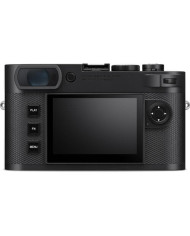
The 2.95" rear touchscreen LCD with 2.3 million dots features an updated design and is brighter for better visibility in sunlight.
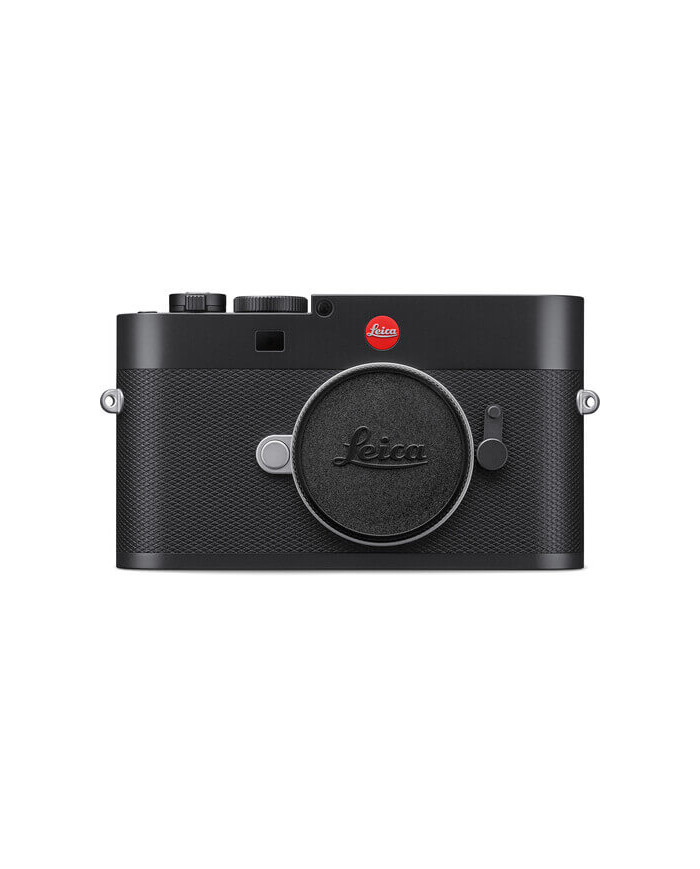
Without an optical viewfinder, the M EV1 has a clean, streamlined front design, and the body also features a new synthetic leather covering with a diamond pattern.
The redesigned menu matches the Q and SL systems for more intuitive navigation and faster setting changes from the first menu page.
Live view stabilisation helps reduce camera shake; this electronic stabilisation makes it easier to focus longer lenses manually with greater precision.
By replacing the optical viewfinder with an electronic viewfinder, the M EV1 is lighter than the rangefinder camera: it weighs 450 g, 473 g less than the M11-P.
Like the M11, Q and SL series cameras, this camera does not have a removable base plate; instead, the M EV1 uses... BP-SCL7 battery that inserts directly into the base of the camera body.
The BP-SCL7 lithium-ion battery is CIPA rated for 237 shots per charge when mainly using the electronic viewfinder, or 244 shots per charge when mainly using the LCD screen.
The design also includes an SD UHS-II memory card slot inside the battery compartment.
The built-in 64 GB memory lets you dispense with a memory card altogether, or use the internal memory together with an SD card to simulate two card slots, separate file types, or for additional storage. Image files can also be transferred from internal memory to the SD card for easier backups.
The USB-C port on the base allows the battery to be charged inside the camera and files to be transferred.
The USB-C port can be used with the included FOTOS cable, which allows direct connection to an Apple iPhone via the Leica FOTOS app for easier file management and sharing.
Wi-Fi and Bluetooth can also be used to connect the camera wirelessly to an iOS device via the FOTOS app.
Images can be geotagged from the app, as well as selected as favourites and rated from your mobile device.