
 Español
 Français


There are no more items in your cart



Si bajamos el precio antes del 30, te devolvemos la diferencia. Ver condiciones
32.5 MP full-frame CMOS sensor
Internal lightweight 12-bit RAW video at 7K 60p
Open Gate video at 7K 30p, high-speed 4K 120p video
Dual Pixel CMOS AF II autofocus and Servo AF for video
Continuous shooting of up to 40 fps and continuous pre-shooting mode
5-axis and 8.5-stop image stabilisation
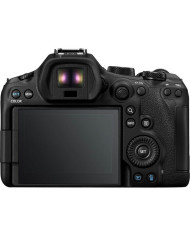
3.69 million-dot OLED electronic viewfinder with OVF display assist
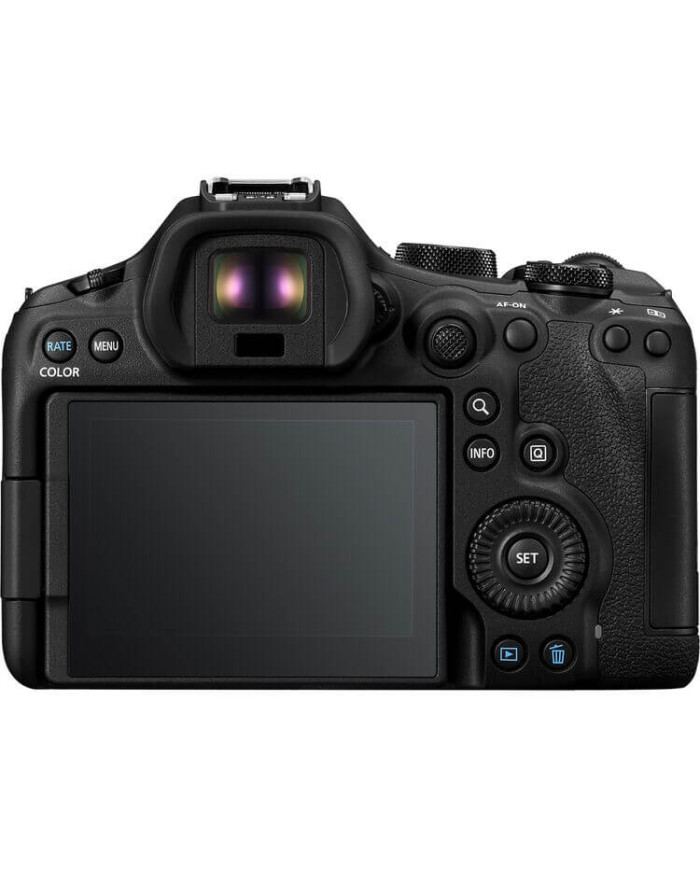
3" 1.62 million-dot vari-angle LCD touchscreen
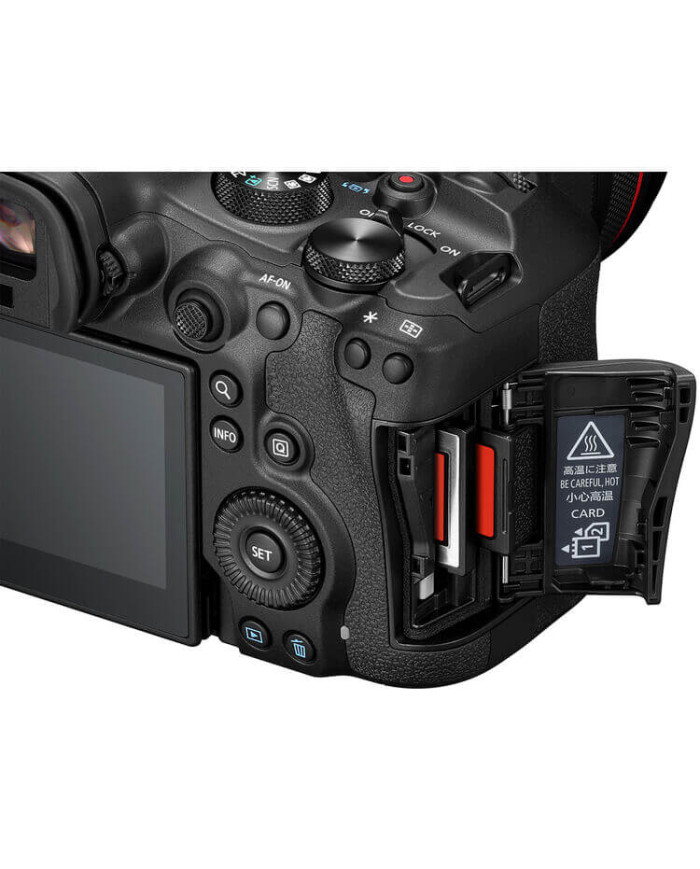
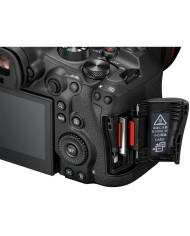
CFexpress and SD UHS-II memory card slots
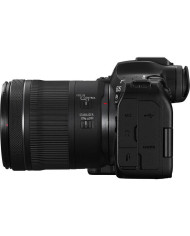
RF 24-105mm f/4-7.1 IS STM lens


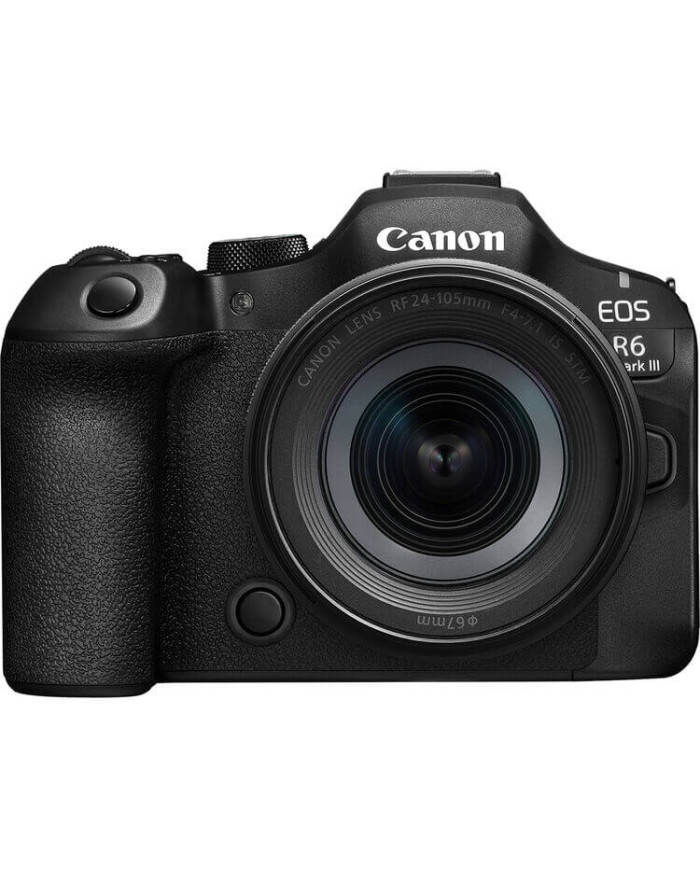
Designed to be the high-performance all-rounder for creatives working in both photography and video, the Canon EOS R6 Mark III masterfully combines a wide range of hybrid capabilities, improved image quality and a redesigned body and handling to suit photographers and videographers working in a wide variety of situations. A new 32.5 MP sensor combines with the DIGIC X processor to deliver 7K video recording, shooting of up to 40 fps, enhanced Dual Pixel CMOS AF II with person registration priority, more robust 8.5-stop image stabilisation, and the R6 Mark III now also accepts CFexpress Type B and SD memory cards for flexible file storage.
With a 34% increase in resolution over its predecessor, the R6 Mark III features a 32.5 MP full-frame CMOS sensor that offers greater sharpness, print resolution and cropping room. This sensor is paired with a DIGIC X processor to deliver excellent image quality, low noise and a wide sensitivity range. In addition, the processing power handles the advanced Dual Pixel CMOS AF II system, as well as continuous shooting, video recording and IBIS.
Inherited from the R3, the R6 Mark III's enhanced processing suits the camera's multimedia nature. Capable of handling high-speed bursts and high-resolution 7K video, the DIGIC X supports continuous shooting of up to 40 fps with silent electronic shutter or 12 fps with mechanical shutter, with AF and AE readings before each frame. There is also a continuous pre-shooting setting that captures 20 additional frames before you fully press the shutter button, ensuring no fleeting movements are missed.
Designed for beginners or for those seeking a practical alternative to post-processing, SCN modes let you change the look of your photos directly in the camera. The R6 Mark III is the most advanced camera with SCN modes, which adjust shooting settings using automatic exposure specific to each scene. Available modes include Portrait, Smooth Skin Portrait, Group Photo, Landscape, Panoramic, Sports, Kids, Sweep Panning, Close-up, Night Portrait of Food, Handheld Night Scene, HDR Backlight Control and even Silent Shutter.
For video, you can use the Smooth Skin Video, Close-up Demonstration, Video Image Stabiliser and HDR modes.
Beyond photography, the R6 Mark III is a high-capacity video camera ideal for creators working across different media:
With a sensor similar to that of the EOS C50 cinema camera, the R6 Mark III can record internal 7K video up to 60p in 12-bit Canon RAW Light Movie format. When recording externally to an optional external recorder, 7K footage can be recorded up to 30p in ProRes RAW.
Open Gate 3:2 recording is possible in 7K 30p in 10-bit MP4 or 12-bit RAW formats. This function is especially useful for those producing social media videos, as it offers a larger recording area to crop when resizing footage to vertical 9:16 or other unique aspect ratios such as 1:1, 4:3 or 4:5.
One of the biggest improvements over the R6 Mark II is that the R6 Mark III has far greater slow-motion and high-speed recording capabilities. It now supports recording in DCI 4K and UHD 4K up to 119.8p for 5x slow-motion playback on a 23.98p timeline. When using DCI 2K and Full HD resolutions, recording at 179.8p is possible. In addition, audio recording is supported at all resolutions and frame rates, except in Slow & Quick Motion (S&F) mode.
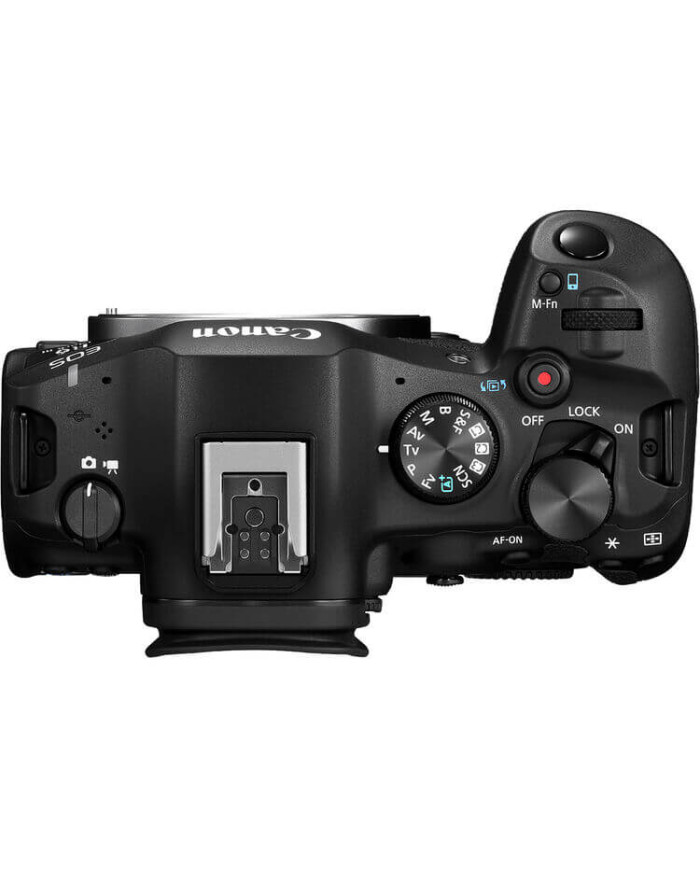
The new Slow & Quick Motion (S&F) mode can be accessed from the Mode dial, allowing control of resolution, frame rate, playback speed and compression.
For especially sharp, clear images, 4K FINE mode uses oversampling to improve image quality at DCI 4K and UHD 4K resolutions in XF AVC S format.
For greater control over the look of recordings directly in the camera, the R6 Mark III includes various colour and style tools to modify the appearance of images:
The Canon Log 2 profile improves dynamic range and provides more than 15 stops of exposure latitude for greater control during colour grading.
LUTs can be used directly in the camera via the Apply Style function; .cube LUTs with 17 or 33 grid points can be registered and saved as custom picture files for direct application during recording. They can also be transferred to the camera using the Canon Camera Connect app.
The 14 colour filters let you add colour and tone adjustments directly to JPEG photos or MP4 videos.
A new Custom Picture menu offers direct access to Canon Log 2, Canon Log 3, HLG, PQ, Canon 709, BT.709, colour filters and other user-adjustable parameters.
Pressing the magnify button during recording lets you zoom in to check focus without interrupting the clip.
Pre-recording starts recording a clip up to 5 seconds before you press the record button, so you don't miss any unexpected moment.
Auto-levelling works together with the built-in image stabiliser to adjust the sensor and level it with the horizon of the scene.
Focus breathing correction can be used with compatible lenses to mitigate the effects of optical focus breathing.
Updated with technology from the EOS R1 and EOS R5 Mark II, the Dual Pixel CMOS II autofocus system is especially fast, precise and responsive, for both photo and video.
This phase-detection system features intelligent subject detection that recognises people, animals and vehicles; once detected, Dual Pixel CMOS II autofocus locks onto the subjects and tracks them accurately even when they are moving. First introduced on an EOS 6 series camera, the Person Priority function lets you photograph a person and register them in the camera so they are prioritised over other people in the scene. This helps you focus on the desired subject when shooting in crowded scenes. Up to 10 different people can be registered at once.
Four new autofocus area options have been added, along with the ability to cancel tracking and subject detection. The R6 Mark III can also register and recall different autofocus settings to make switching modes easier.
Custom button functions can be set up to register a preset focus position, similar to the focus recall buttons on Canon's super-telephoto lenses.
The Servo AF algorithm for video has been borrowed from the C400 and C80 cameras so that autofocus changes look more natural and similar to manual focus changes.
The improved in-body image stabiliser (IBIS) now compensates for up to 8.5 stops of shake at the centre of the frame and 7.5 stops at the edges, for sharper images when shooting handheld in low light and reduced shake when recording video. While especially useful with lenses that have no stabilisation, this system can also be used with lenses that have coordinated image stabilisation (IS), which combines in-body and in-lens stabilisation.
In addition, digital image stabilisation for video uses optical and sensor-shift stabilisation together with digital stabilisation to achieve steadier footage while moving.
The high-resolution electronic viewfinder (3.69 million dots, 0.5") and 0.76x offers a sharp, detailed display at eye level. The View Assist function of the optical viewfinder provides a more realistic and vivid experience, with greater dynamic range and a reproduction inspired by an optical viewfinder.
The 3.0" rear touchscreen LCD with 1.62 million dots has a vari-angle design that makes front-facing recording easy, ideal for vlogs, as well as working from high and low recording angles.
For the benefit of videographers, it also includes exposure monitoring tools from Cinema EOS cameras, such as zebra display, false colour and waveform monitor.
The R6 Mark III allows high-resolution recording at higher speeds and features two memory card slots: one CFexpress Type B and one SD compatible with UHS-II V90 cards. This setup allows photographers to shoot continuously for long periods and videographers to record at maximum resolution for longer clips.
Designed for maximum reliability, this camera features a magnesium alloy chassis and a body sealed against dust and moisture, ideal for working in adverse weather conditions.
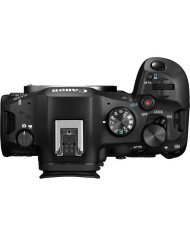
The shutter has passed 500,000 durability test cycles, matching the shutter of the R5 Mark II. The multi-function shoe uses a row of pins at the front to expand accessory functionality and power certain accessories that traditionally require separate batteries, such as the DM-E1D stereo microphone, the EL-5 flash and the ST-E10 flash transmitter, among others, as well as the AD-E1 multi-function shoe adapter to offer compatibility with older hot-shoe accessories.
Now compatible with the improved LP-E6P battery, the R6 Mark III offers 620 shots per charge.
Compatible with the optional BG-R20 battery grip to extend battery life and improve ergonomics when shooting in portrait orientation.
Offers wired and wireless connectivity options, allowing multiple methods for transferring photos and videos as well as remote camera control.
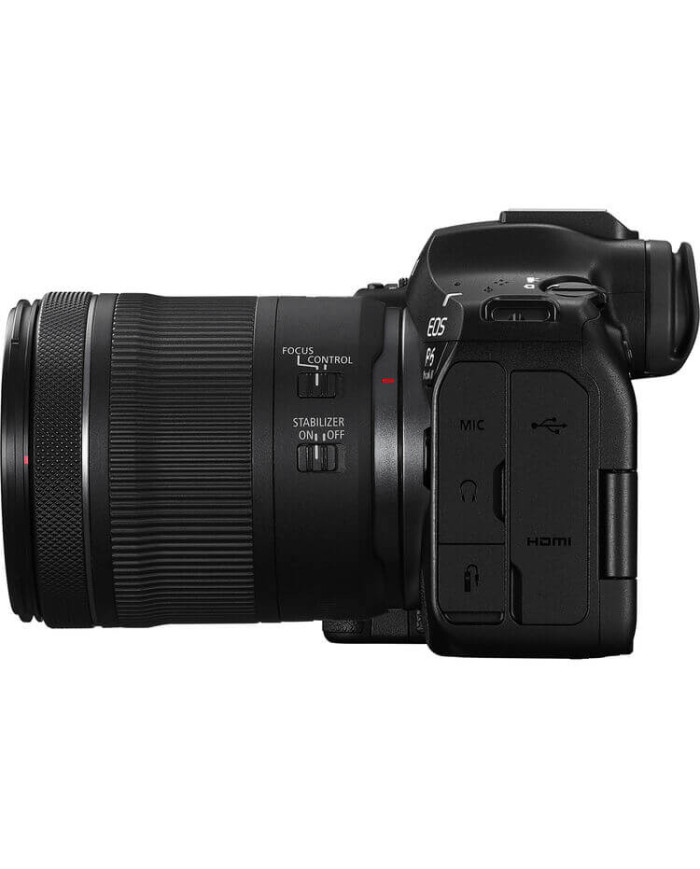
USB-C 3.2 Gen 2 port for charging and transferring files within the camera; this port also allows the camera to be used as a Full HD 30p webcam compatible with UVC/UAC protocols. 3.5 mm ports for headphones and external microphone.
Bluetooth and 5/2.4 GHz Wi-Fi for wireless transfers and remote camera control from mobile devices via the Canon Camera Connect app.
The FTP server function meets professional needs for sending files directly to computers, servers or NAS devices, and the Canon Content Transfer Professional app supports more advanced transfer features such as metadata entry, image filtering and file sorting.
Inherited from the R5 Mark II, it makes it easy to save and load the communication settings of the most commonly used networks.
Elegant and versatile, the Canon RF 24-105 mm f/4-7.1 IS STM is a full zoom covering wide-angle to short telephoto, making it easy to use in a wide range of conditions. Its variable maximum aperture helps keep it surprisingly compact, ideal for everyday photographic needs. Its flexible design is complemented by a unique central macro focusing position, allowing you to work with close-up subjects at a maximum magnification ratio of 1:2. In addition, the optical image stabiliser helps produce sharp images by minimising camera shake. The STM motor provides surprisingly quiet and smooth autofocus, with the option to override focus manually at any time. The configurable control ring lets you adjust exposure, including ISO, aperture and exposure compensation, directly from the lens.
The standard zoom covers wide-angle to short telephoto, adapting to a variety of situations.
The optical image stabiliser minimises camera shake by up to five stops, making it easier to work in low light and at slow shutter speeds.
The STM stepping motor delivers fast, quiet, smooth and precise autofocus, ideal for both video recording and photography. The specialised central macro focusing setting allows working at a maximum magnification of 1:2 and a minimum focusing distance of 13.2 cm (5.2"), ideal for photographing close-up subjects. The configurable control ring lets you adjust various exposure parameters, such as aperture, ISO and exposure compensation. The seven-blade rounded diaphragm contributes to high-quality bokeh.